
Local Customs
Navigating Etiquette and Norms
Understanding the social fabric of a country is just as important as knowing its geography. Egypt is a land of deep traditions and social expectations that govern everything from greetings to business transactions. For the traveller into Egypt, being aware of these norms is the key to respectful and meaningful interactions. Our cultural guides aim to bridge the gap between visitors and locals, ensuring that your journey is marked by mutual respect and genuine connection.
01 / Social Foundations
Hospitality & the Art of Greeting
The Importance of Hospitality
Hospitality is more than just a gesture — it is a fundamental duty in Egyptian culture. Being invited for tea, coffee, or even a full meal is a common occurrence. It is polite to accept, even if you can only stay for a short time. When entering someone's home, remember to remove your shoes and bring a small gift, such as sweets or fruit, as a token of appreciation.
Refusing an invitation outright can read as cold. If you truly cannot stay, offer a warm thank-you and a specific reason — your host will understand. The gesture of accepting, even briefly, is what matters.
- ✓ Accept tea or coffee when offered — even a sip shows respect
- ✓ Remove your shoes before entering a home
- ✓ Bring sweets or fruit as a small token of thanks
The Art of Greeting
Greetings are an essential part of daily life and can often be quite lengthy. A simple "Salam Alaikum" — peace be upon you — is the standard opening, followed by inquiries about health and family. Handshakes are common, but it is important to wait for a woman to initiate a handshake with a man. Taking the time for these social niceties shows that you value the person you are speaking with, not just the information you need.
Rushing past a greeting to get to a question or a request reads as rude. Give the exchange its full weight — ask about family, health, and the day before moving to business. This is how trust begins.
Useful Openings
- Salam Alaikum
- Peace be upon you — the standard opening
- Wa Alaikum Salam
- And peace be upon you — the standard reply
- Sabah El Kheir
- Good morning — used before noon
- Masaa El Kheir
- Good evening — used after sunset
02 / Dress & Appearance
Modesty in Dress
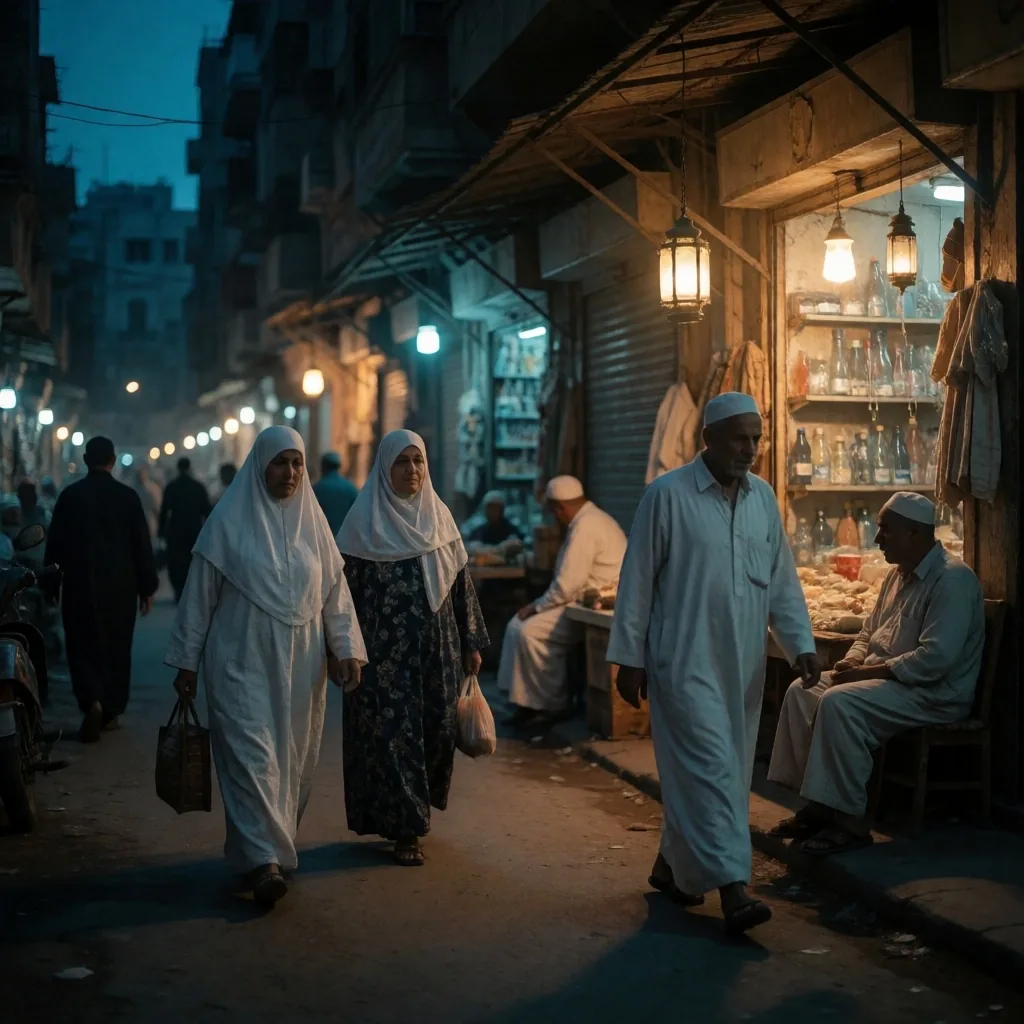
While the coastal resorts are more relaxed, the majority of the country adheres to conservative standards of dress. Both men and women should aim to cover their shoulders and knees when in public spaces, particularly in rural areas and religious neighborhoods. Dressing modestly is a sign of respect for local values and will generally result in more positive interactions with the community.
Loose, breathable fabrics work well in the heat and align with local norms. Light cotton or linen layers that cover shoulders, chest, and knees are practical and culturally sensitive. Save swimwear for the resort and beach areas.
Coastal Resort Areas
More relaxed. Swimwear at pools and beaches is standard. A cover-up for walking to and from the water is considerate.
Towns & Rural Areas
Conservative. Cover shoulders and knees. Women may consider a light scarf. Long, loose clothing is the norm.
03 / Respect & Boundaries
Social Hierarchy & Photography
Respect for Elders
Respect for one's elders is a cornerstone of Egyptian society. Older individuals are often addressed with honorary titles and are given priority in social situations. As a visitor, showing deference to older people — whether they are shopkeepers, guides, or fellow passengers on a bus — will be highly appreciated. It reflects a level of cultural awareness that goes beyond the typical tourist experience.
Small gestures carry weight: offering your seat, letting an older person go first in a doorway, or addressing them with a polite title before asking a question. These actions are noticed and remembered.
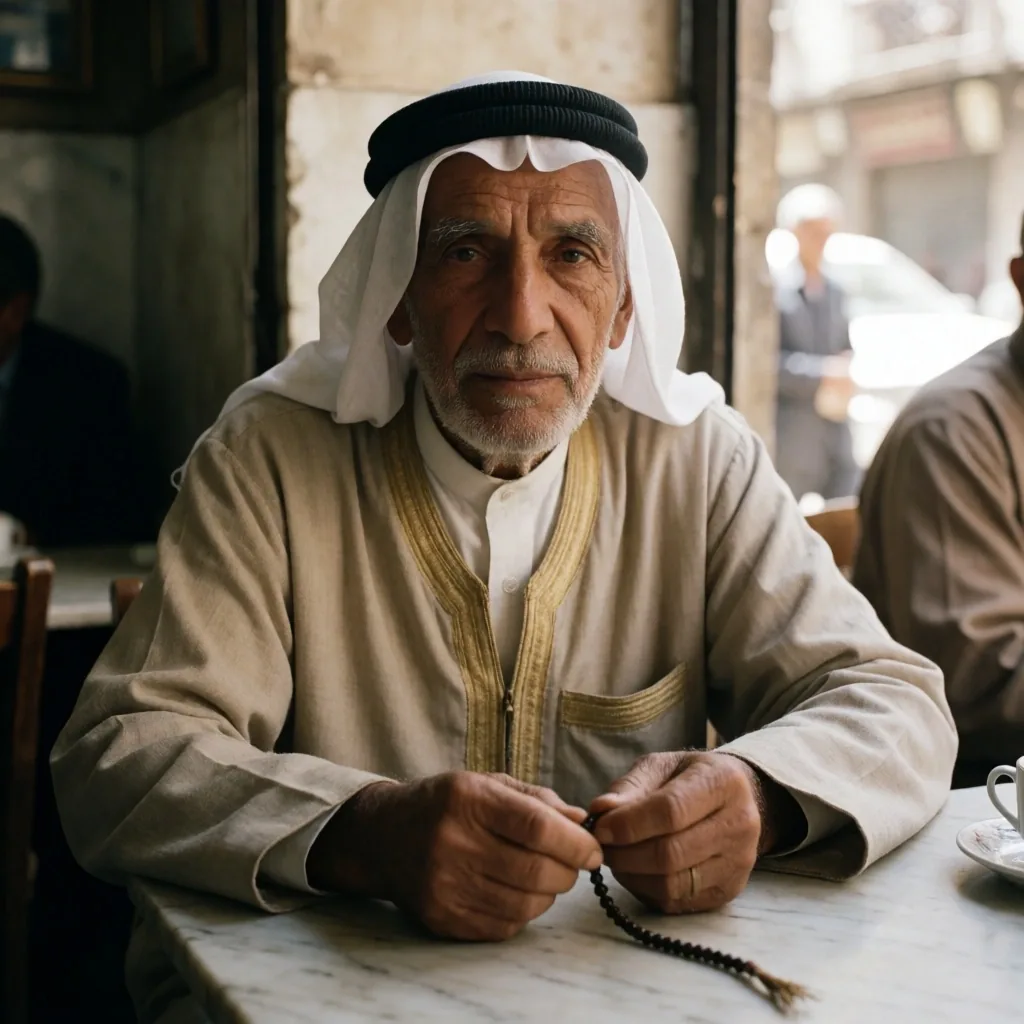
Coffeehouse — Cairo
Photography & Consent
Egyptians are generally very friendly, but it is always important to ask permission before taking a photo of a person. This is especially true in rural areas and for women. Some people may ask for a small tip in exchange for a photo, which you can choose to accept or decline. Respecting people's privacy and dignity is paramount for any responsible traveller into Egypt.
A simple gesture — raising your camera and smiling — is often enough to ask. If someone waves you off, move on gracefully. The image you do not take is sometimes the more respectful one.
What to Know
- → Always ask before photographing individuals
- → Avoid photographing women without explicit consent
- → Be cautious near government buildings and checkpoints
- → A small tip may be expected — your choice to accept
04 / The Market & the Economy
Navigating the Souk
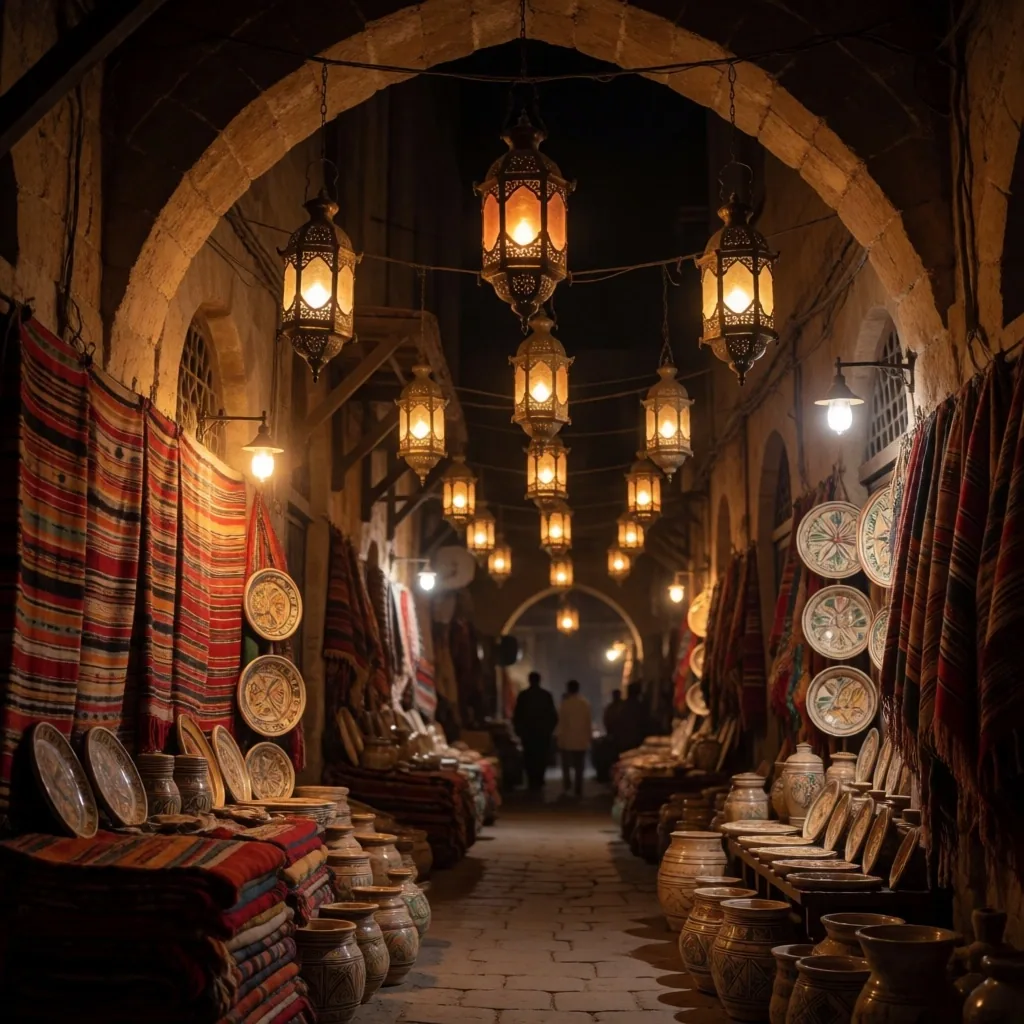
The market, or souk, is a place of high social energy and complex negotiation. It is expected that you will engage in a bit of back-and-forth over the cost of an item. This should always be done with a smile and a sense of humor. The goal is not just to get a lower cost, but to engage in a social exchange. If you reach a stalemate, it is perfectly acceptable to walk away politely.
Start lower than what you are willing to give, meet in the middle, and keep it light. Vendors expect this dance. Walking away is not rude — it is part of the rhythm. Often the vendor will call you back with a better offer.
Tipping & the Concept of Baksheesh
Baksheesh is a term you will hear often, and it refers to a small tip or gratuity for a service rendered. It is a standard part of the economy and is expected for everything from help with bags to directions on the street. Carrying a supply of small notes is essential. Think of it not as a nuisance, but as a way of supporting the local service workers who help make your trip easier.
Keep small-denomination bills separate from larger ones so they are easy to reach without displaying your full wallet. A small tip for a bathroom attendant, a parking helper, or someone who carried your luggage is standard practice.
Carry Small Notes For
05 / Daily Rhythm & Social Spaces
Rest Days, Boundaries & Tea Culture
Friday: Rest & Prayer
Friday is the most important day of the week in the Islamic calendar. Many shops and businesses will close during the midday prayer, and the streets can become very quiet. It is a time for family gatherings and religious observance. As a traveler, planning for a slower pace on Fridays will help you avoid frustration and allow you to witness the rhythmic beauty of the communal prayer calls.
Use Friday mornings for quieter activities — a long walk, a café visit, or simply resting. Shops that close midday often reopen in the late afternoon and stay open later than usual.
Public Displays of Affection
Public displays of affection are generally discouraged and can be seen as disrespectful. Even for married couples, holding hands or other forms of physical contact in public should be kept to a minimum. Observing these boundaries helps you blend in and avoids causing discomfort to those around you. It is a simple adjustment that shows you are sensitive to local norms.
Hand-holding is generally tolerated in tourist-heavy areas, but anything beyond that — embracing, kissing — should wait until you are in a private space. When in doubt, take your cue from the people around you.
Tea & Coffee Culture
Coffee houses, or ahwas, are the social hubs of the neighborhood. They are places for men to gather, talk, and relax. While women are increasingly present in these spaces in urban areas, they remain largely male-dominated in traditional districts. Participating in this culture means sitting down, ordering a drink, and taking your time. It is the best way to observe the daily social dynamics of the community.
Order shai — tea — or ahwa — coffee — and settle in. The pace is slow, the conversation flows, and no one will rush you. Watching the room is half the experience.
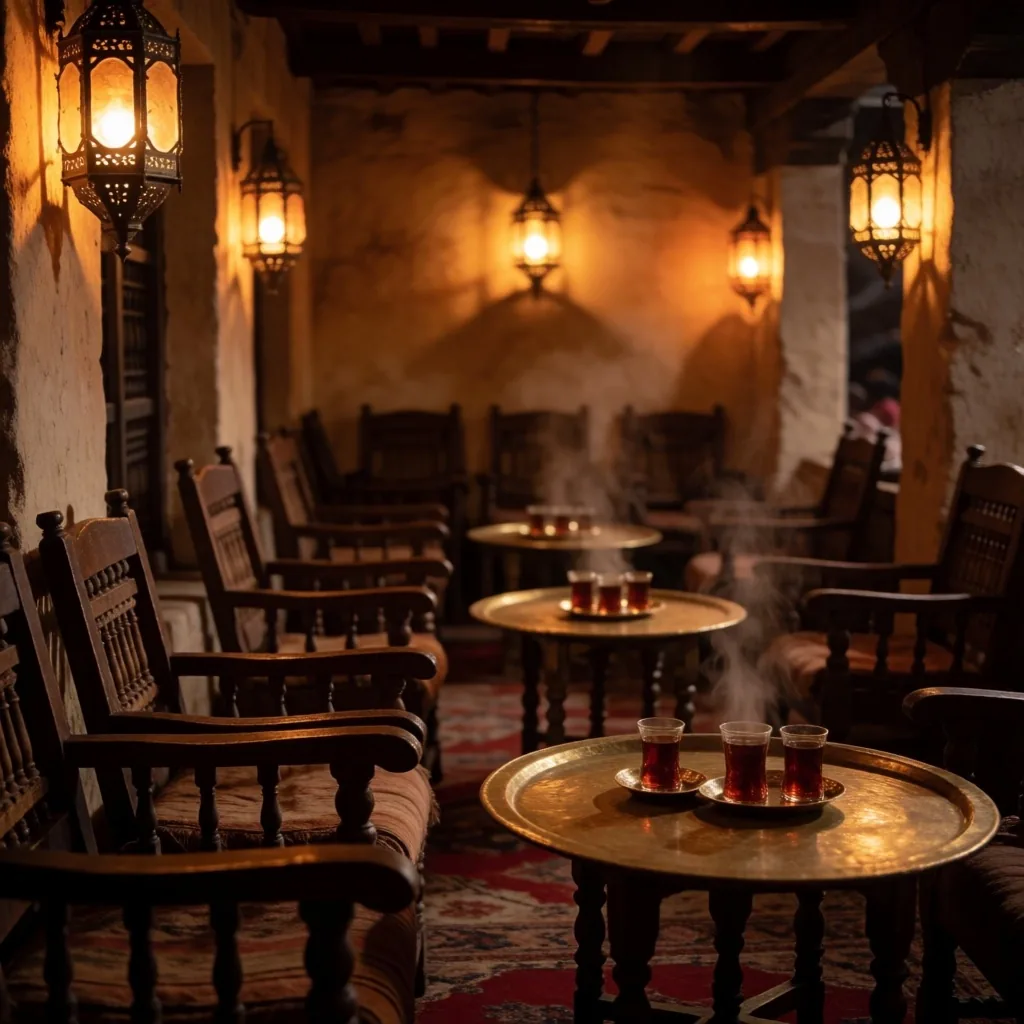
Ahwa — Evening
06 / Continue the Journey
Travel With Awareness
Cultural awareness is not about memorizing rules — it is about approaching each encounter with genuine curiosity and respect. These egypt travelling guides exist to help you move through the country with the confidence of someone who has done their homework.
Keep exploring our practical guides for the rest of your journey through Egypt.